
Well4ever has long been the home of the Putney Acupuncture Clinic and has been providing acupuncture care in South West London to our great community for a wide range of physical and mental conditions.
Acupuncture is an ancient and highly sophisticated Chinese medical system, developed over two thousand years ago in China. It is based on the concept of Qi or Chi (pronounced ‘chee’), the vital, life force that flows in our bodies through an energetic network of channels known as meridians, or acupuncture channels (Jingluo).
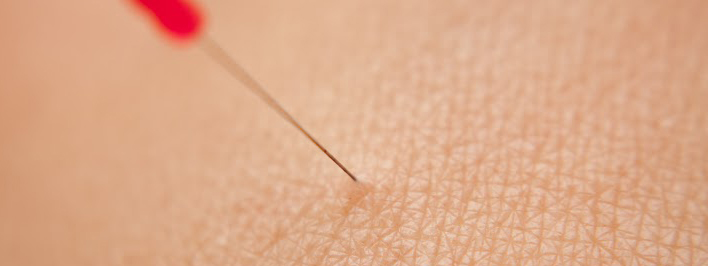
Acupuncture is the practice of inserting very thin needles into specific time-tested acupuncture points along the body’s meridians. The needles are used to eliminate blockages and restore the free flow of qi.
Acupuncture Treatment – What To Expect
Your first consultation will last 90 minutes. Guy will discuss your medical history with you, check your pulse, ask to see your tongue (this is the only internal organ we can examine so easily and has much to reveal about our physical and mental health) and will apply needles to specific points on your body in relation to your health complaint.
Does it hurt? We tend to associate needles with pain but this need not be the case with acupuncture! Often you will not even notice the needles going in. Acupuncture needles are very fine and tend to be a fraction of a millimeter in diameter, that is many times smaller than an injection. You may feel a slight tingling sensation, warmth or a dull ache, but these are what we call Qi sensations or ‘De Qi’ which is what we want in order for the acupuncture treatment to be effective.
Do I need to undress? An acupuncture treatment will involve a specific point combination uniquely tailored to you. Some treatments only involve the application of needles to the face, hands or toes, for example. Some clients will need to remove clothing to make other acupuncture points available (for example on the upper leg). Gowns and towels are used for your modesty. Your personal religious and cultural sensitivities will always be respected.
How will I feel? Your tailored needle combination is aimed at balancing your unique constitution. As well as addressing specific health complaints, acupuncture should lead to physical invigoration and increased energy levels as well as emotional calm and relaxation.
Over the centuries, people have turned to acupuncture for a wide range of health problems. The World Health Organization (WHO) has recognised acupuncture as successfully helping people with:
- low back pain
- neck pain
- sciatica
- tennis elbow
- knee pain
- periarthritis of the shoulder
- sprains
- facial pain (including craniomandibular disorders)
- headache
- dental pain
- tempromandibular (TMJ) dysfunction
- rheumatoid arthritis
- induction of labour
- correction of malposition of fetus (breech presentation)
- morning sickness
- nausea and vomiting
- postoperative pain
- stroke
- essential hypertension
- primary hypotension
- renal colic
- leucopenia
- adverse reactions to radiation or chemotherapy
- allergic rhinitis, including hay fever
- biliary colic
- depression (including depressive neurosis and depression following stroke)
- acute bacillary dysentery
- primary dysmenorrhea
- acute epigastralgia
- peptic ulcer
- acute and chronic gastritis
Acupuncture takes an integrative approach and considers the whole person rather than focusing on symptoms only. Likewise, the body and mind are understood as parts of one energetic system as opposed to two separate entities. Physical and emotional disturbances can thereby be interpreted and treated as different manifestations of blocked or imbalanced qi.
Acupuncture – What’s it all about in 500 Words
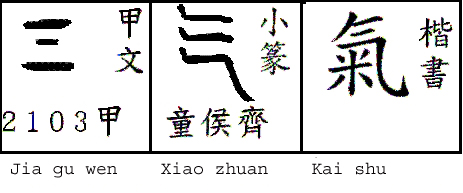
Qi does not translate easily into English as it was identified within a Chinese medical framework, using associations and ideas that are unfamiliar to Western thought. The literal translation would be ‘vapour’ or ‘breath’. Chinese characters are made up of two components, with the left-hand side of the character acting as the ‘radical’ which gives us a clue to the nature of the whole word. Qi’s radical is ‘vapour’ or ‘steam’ while the right-hand side denotes ‘rice’. Together, the qi character in mandarin symbolises the steam rising up from rice.
In its wider context, we can interpret it as the vital life force, prana, or breath that exists in every living body and is responsible for the constant movement within. In the human body it manifests itself in physical and spiritual capacities as energy and function: it is responsible for all activities that occur in the human body from digestion to immunity, from blood circulation to mental processes. In Between Heaven and Earth: A Guide to Chinese Medicine, practitioners Harriet Benfield and Efrem Korngold describe qi:
Matter is qi taking shape. Mountains forming, forests growing, rivers streaming, and creatures proliferating are all manifestations of qi: sensing, cogitating, feeling, digesting, stirring, and propagating. Qi begets movement and heat. It is the fundamental mystery and miracle.
Acupuncture is the practice of using fine needles inserted into various points of the body situated along the meridian lines, to maintain or restore a healthy and balanced flow of qi, through the meridians and therefore the entire body. When we experience free flowing qi we feel healthy and well, however, when the flow of qi becomes blocked, we experience discomfort, pain and illness. An old Chinese saying illustrates this succinctly, “pain, no free flow. Free flow, no pain”. Acupuncture attempts to eliminate any blockages and restore the free flow of qi throughout body, thereby enabling the body to achieve balance and regain health.
Of equally fundamental importance is the theory of yin and yang, developed around the fifth century B.C. It is based on the idea that the two opposite qualities in nature complement each other. Like day and night, male and female, hot and cold, internal and external. They are interdependent in so far as they give each other meaning and one cannot exist without the other.
In nature yin and yang can be seen respectively as the shady and sunny side of a slope.
In the context of the body yin and yang have particular properties. Yin is associated with coolness, stillness, internal and down whereas yang is associated with the opposite characteristics: Heat, Movement, external and up. A Chinese medical diagnosis might refer to a deficiency in yang (for someone who is introverted and tends to feel cold). The human body consists of substance and energy, form and function, yin and yang, meaning that every part of the body can be defined in relation to any other part. The body is more than just the sum of all its parts. TCM is concerned balancing yin and yang in the body to create optimal health.
If you are interested in reading more about acupuncture and/or other health related topics please visit our educational resources page and blog.
Meet your local putney acupuncturist, Guy Lederman and check out the well4ever blog.
Acupuncture at Well4ever
References:
- Review and Analysis of Reports on Controlled Clinical Trials, World Health Organization, 2003.
- Acupuncture: Review and Analysis of Reports on Controlled Clinical Trials. Available.
- Benfield H. et al. Between Heaven and Earth: A Guide to Chinese Medicine. 1991. Ballantine Books: New York.
- Shen, Hongxun. ‘Chi’. Bu Qi. Available.